H. PYLORI INFECTION
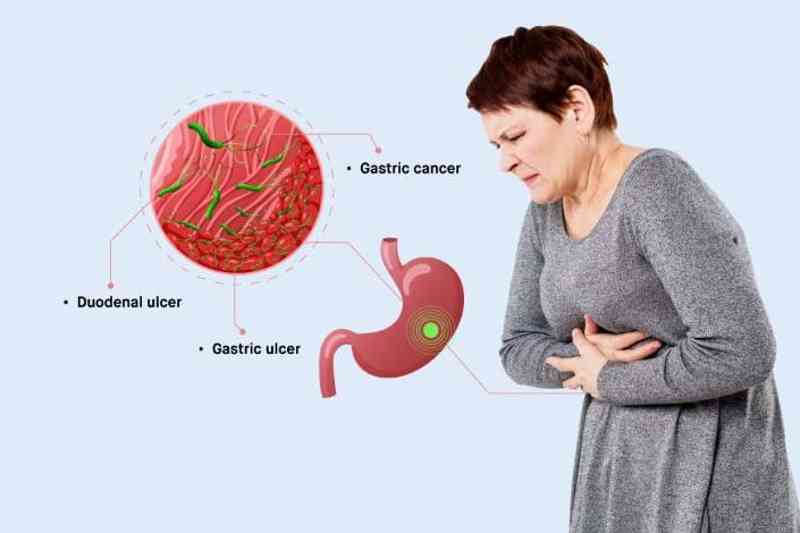
Helicobacter pylori (or H. pylori) is a germ (bacterium). Pylori bacteria can infect the lining of the stomach and duodenum (the first part of the intestine).
Most people with H. pylori have no symptoms at all. H. pylori can cause stomach irritation (gastritis), stomach and duodenal (small bowel) ulcers.
How common is Helicobacter pylori infection?
H. pylori infection is very common. Globally, around half of all people have it. It is more common in developing countries. Once someone gets H. pylori, unless treated, it usually stays for the rest of their life.
What causes Helicobacter pylori infection?
It is thought to spread from person to person. Most people seem to get it in childhood, probably from their parents or siblings.
Common symptoms of H. pylori gastritis or ulcers
Pain in the top part of the abdomen (stomach), below the rib cage and in the middle. This can feel like an ache, a discomfort, a burning pain, or sometimes a sharp pain. The pain is often affected by eating; it may get worse after eating, although sometimes it improve after eating.
Nausea (feeling sick).
Frequent burping.
Bloating sensation in stomach and gas distension.
Other symptoms that occur as a complication of H Pylori infection include:
Unintentional weight loss.
Vomiting blood.
Having black, sticky, 'tar-like' poo (melaena).
Symptoms of anaemia, like feeling short of breath, looking pale, or feeling very tired.
Diagnosing H Pylori Infection
A urea breath test can confirm a current H. pylori infection.
In this test, you drink a special liquid that contains a chemical called urea.
You then give a breath sample which is then analyzed in a lab.
H. pylori breaks down urea. So, if H. pylori is present, breakdown products of urea will be found in the breath sample.
Note: prior to this test you should not have taken any antibiotics for at least four weeks. Also, you should not have taken a proton pump inhibitor (PPI) or H2-receptor antagonist medicine for at least two weeks. (These are acid-lowering medicines.) Also, you should not eat anything for several hours before the test (check the exact test for instructions). Medication and food can affect the test result.
Follow-up: A second Urea Breath test is done 4 weeks after finishing the Eradication Therapy to check if H Pylori has been eradicated.
H pylori treatment
Antibiotics
H. pylori is killed by certain antibiotics. However, a combination of medicines is needed to get rid of it completely. This is referred to as triple therapy, although because it gets rid of (eradicates) H. pylori, it is also called eradication therapy.
H. pylori treatment consists of three different medications, taken together for one week. These are two different antibiotics (for example, amoxicillin and clarithromycin), and an acid-lowering medication (omeprazole). It is important to take all the medication exactly as directed and to take the full course.
This Eradication Therapy clears H. pylori in up to 9 in 10 cases if it is taken correctly for the full course. If you do not take the full course then the chance of clearing the infection is reduced. A second course of eradication therapy, using different antibiotics, will usually work if the first course does not clear the infection.
Complications of Helicobacter pylori
It can cause Gastritis and bloating sensation or it may sometimes cause severe conditions like Peptic Ulcer, Duodenal Ulcer or Stomach cancer (rare).
Prevention of H Pylori infection
General hygiene measures help to lower the risk of H. pylori infection: These are:
Washing hands thoroughly before eating, before preparing food, and after using the toilet.
Eating food and drink that has been hygienically prepared.
Drinking water from safe, clean sources only.
Dr. M Najeeb, MBBS, MSc, MRCGP (UK)
Diabetologist & General Physician
City Clinic Khaitan
.png)
.png)